
Dr Gilbert Soulodre, FAES
Founder and CEO - Camden Labs
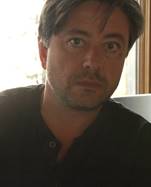
Dr. Gilbert Soulodre has more than four decades of experience in the field of audio as a research scientist, a product developer, an educator, and a mixing engineer. He has written more than 60 scientific papers in the areas of loudness metering, subjective testing, concert hall acoustics, psychoacoustics and spatial perception, digital signal processing, and multi-channel audio. As the founder and CEO of Camden Labs, he has invented a variety of signal processing algorithms and has authored numerous patents. His product development work stretches across a wide range of areas including; automotive audio, consumer electronics, immersive cinema surround sound, virtual reality, microphone array processing, the music recording industry, audio restoration, mobile phones and tablets, speech processing, and audio compression.
Gil was the head of the Audio Perception Lab at the CRC in Ottawa where he developed the subjective testing methods that are used in the ITU-R BS.1116 and BS.1534 (MUSHRA) standards. During that time he also conducted numerous subjective tests to evaluate the performance of various perceptual audio codecs. He was formerly a professor in the Sound Recording program at McGill University and also in the Department of Psychology at Carleton University. He served as a reviewer for the Journal of the Audio Engineering Society (AES) for many years.
Gil is a Fellow of the AES and has received recognition and awards from the Acoustical Society of America, the American Institute of Physics, the IEEE, and the Canadian Government. He received the AES Publications Award for his work on spatial perception in immersive sound environments. In 2022, he presented the Richard C. Heyser Memorial Lecture at the 153rd AES Convention in NYC.
In the early 2000’s, Gil developed a method for accurately measuring and predicting the perceived loudness of audio signals. This technology was adopted as an international standard (ITU-R BS. 1770, EBU R-128, CALM Act) and is now used extensively around the world. In 2012, Gil received a Technology and Engineering Emmy Award from the National Academy of Television Arts and Sciences for his work developing the loudness meter.
In 2024, Gil was awarded the AES Gold Medal (the Society’s highest honor), “for extraordinary contributions to audio, including the creation of the loudness meter that helped address loudness issues in music and broadcast”. It is fair to say that a large portion of the people on the planet have (unknowingly) benefited in some way from his work.

Dr Soulodre has invented numerous audio technologies that are found in scores of audio products from numerous manufacturers, including several award-winning products. Some of these technologies/products are described below.
• QuantumLogic Surround; QuantumLogic 3D; QuantumLogic Immersion
The QuantumLogic family of technologies are advanced real-time multichannel upmixers that can include height channels to create a truly immersive playback experience from stereo source content. QuantumLogic uses several signal extraction technologies invented by Gil to decompose the original stereo signal into individual sound sources (objects). It also uses the reverb extraction (dereverberation) algorithms invented by Gil. QuantumLogic can create independent output channels for traditional 5.1 and 7.1 formats, but can create up to 32 independent unique channels from any audio source.
• Clari-Fi audio restoration. Real-time processing to restore the perceived quality of audio signals that have been compressed by lossy perceptual audio codecs (eg MP3).
• AutoVolume (A real-time process to automatically control and balance the loudness of audio signals coming from multiple sources).
• The loudness meter (ITU-R 1770 and EBU R128) invented by Gil is found in a wide range of products offered by numerous manufacturers of professional and consumer audio products.
• BackDrop Noise Reduction BackDrop is TC Electronic’s flagship noise reduction algorithm available on their System 6000 platform. It has found widespread use in mastering of music and film.
• Real-time noise reduction algorithm for hearing aids (used by multiple manufacturers).
• Digital artificial reverberation algorithms embedded in products from several manufacturers
Send message
Need to reach us?
Have questions or want to learn more about our cutting-edge audio technologies? We’re here to help. Whether you’re looking to collaborate, inquire about our services, or simply explore the possibilities of sound innovation, Camden Labs is ready to connect.
Reach out to us today, and let’s shape the future of audio together.
- Ottawa, Canada
- info@camdenlabs.com